

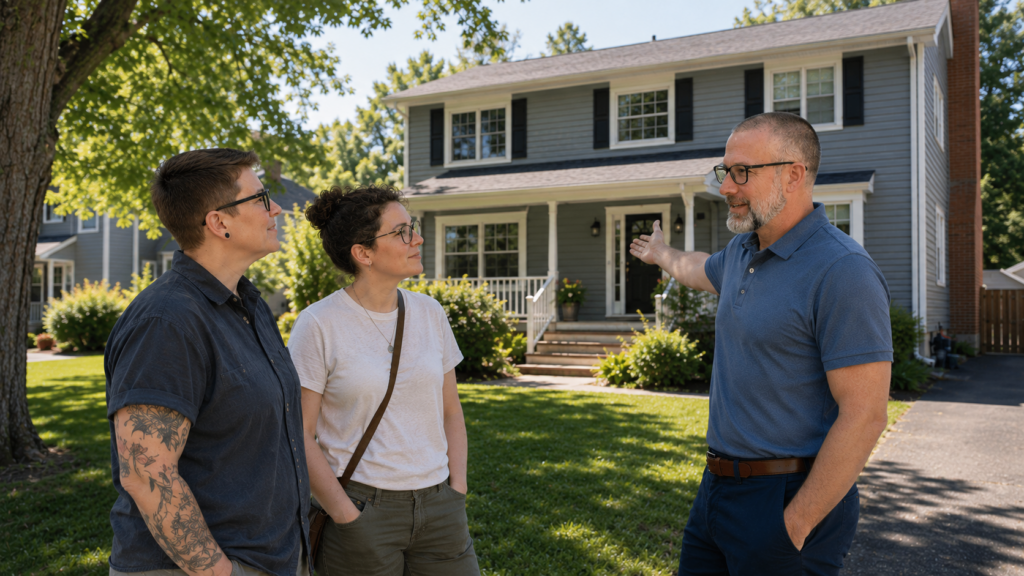
Buying a home is exciting.
It’s also a lot.
There are homes to compare, neighbourhoods to explore, mortgages to understand, inspections to arrange, legal documents to review, deadlines to meet, and dozens, if not hundreds of decisions to make along the way.
That’s challenging for almost anyone.
If you’re neurodivergent, some parts of the process may feel extra taxing. Fast-paced decisions, changing plans, unfamiliar situations, information overload, and the pressure to “decide now” can make an already complex process feel even more demanding.
The good news?
Buying a home doesn’t have to feel rushed or overwhelming.
With clear communication, realistic expectations, and a REALTOR® who’s willing to adapt to your needs, the experience can feel much calmer, more manageable, and even enjoyable.
Over the years, I’ve come to believe something simple: a good REALTOR® shouldn’t expect every client to fit the same process. Instead, the process should adapt to the client.
That’s what this article is about.
You’ll also find some tips to help alleviate the stress of home buying, and I’ll lay out the home buying process for you.
Every Neurodivergent Person Is Different
Before we go any further, it’s important to acknowledge that “neurodivergent” is a broad term. It includes people with ADHD, autism, dyslexia, Tourette syndrome, OCD, and many other ways of thinking and processing information.
Maybe you don’t identify as neurodivergent, but you would consider yourself to be an introvert.
No two people experience the world in exactly the same way.
Some people love detailed information. Others prefer a simple overview.
Some make decisions quickly. Others need time to reflect.
Some prefer phone calls. Others find written communication much easier.
None of those approaches are right or wrong.
Rather than making assumptions about what someone needs, I think it’s better to ask, listen, and adapt.
That isn’t just good service for neurodivergent buyers.
It’s good service for everyone.
Buying a Home Isn’t One Decision
People often say buying a home is one of the biggest decisions you’ll ever make.
I don’t think that’s quite true.
It’s actually hundreds of smaller decisions.
Should we book the showing?
Do we like the neighbourhood?
Will this layout work for our family?
How old is the roof?
Can we afford future repairs?
Should we make an offer?
Should we wait?
Should we negotiate?
Should we walk away?
Every one of those decisions requires gathering information, weighing options, and thinking about the future.
Now imagine you’ve looked at six houses in one afternoon.
The kitchens are starting to blur together.
You’re trying to remember which home had the large backyard, which one had the noisy street, and which basement had the water stain.
Then someone asks,
“So…what do you think?”
For many people, that’s a difficult question to answer immediately.
Not because they don’t know.
Because they haven’t had time to sort through everything they’ve just seen.
And that’s perfectly okay.
Decision Fatigue Is Real
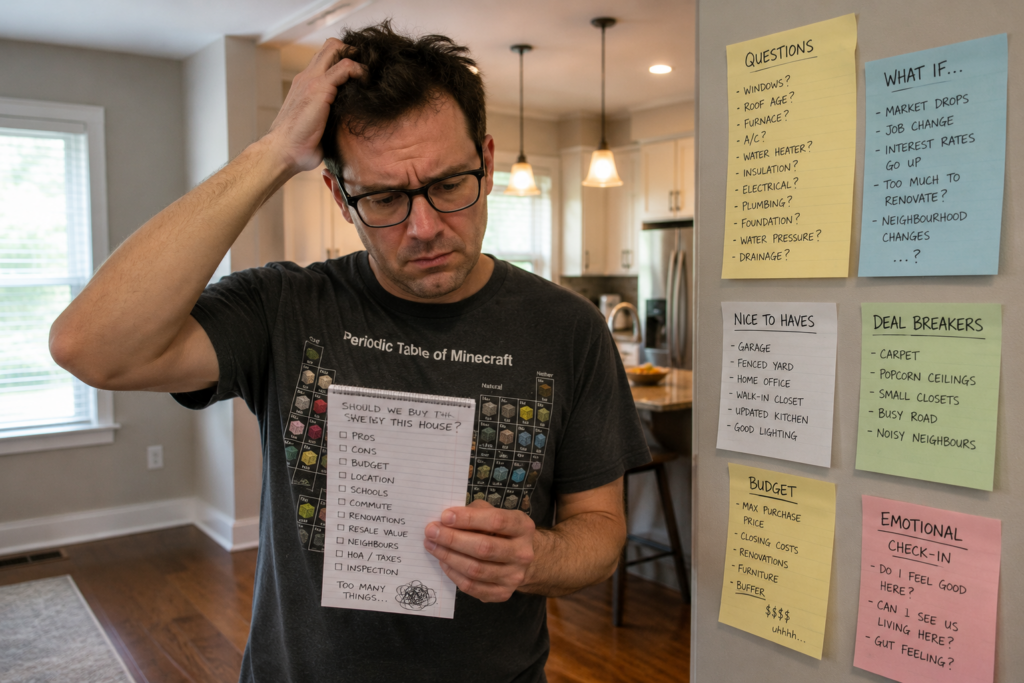
One of the things I think we don’t talk about enough is decision fatigue.
Every showing requires you to notice and remember dozens of details.
The condition of the roof.
The smell of the basement.
The amount of natural light.
The traffic outside.
The size of the bedrooms.
The age of the furnace.
Where your furniture would fit.
Whether you can picture yourself living there five years from now.
Your brain is constantly processing information.
After a while, even beautiful homes can start blending together.
Sometimes buyers worry that they’re becoming indecisive.
Often, they’re simply mentally tired.
Taking a break, reviewing your notes, or sleeping on a decision can make a remarkable difference.
You Don’t Need to Buy a House the Way Someone Else Does
One of the biggest myths about real estate is that everyone should buy a home the same way.
That isn’t true.
Some people walk into a home and instantly know it’s the right one.
Others need to compare notes, think things over, or come back for a second look.
Some people process information by talking it through.
Others process it quietly.
Some like detailed explanations.
Others prefer the highlights first.
There isn’t one “correct” way to make a good decision.
The goal isn’t to make a fast decision.
The goal is to make a confident one.
If you miss out on a house because you needed more time to decide, that’s ok. It probably wasn’t the right home anyway.
Another one will come along, and maybe you’ll feel when it’s the right home.
Communication Can Make All the Difference

Uncertainty is one of the biggest sources of stress during a real estate transaction.
What happens next?
Did I miss something?
Is this normal?
Am I supposed to do anything?
Good communication answers those questions before they become worries.
Sometimes that means sending information in writing.
Sometimes it means breaking a complicated process into smaller steps.
Sometimes it simply means slowing down long enough to answer questions without making someone feel rushed.
I’ve always believed that people make better decisions when they understand what’s happening.
Home Showings Can Be More Draining Than They Look
Most people think a showing is just walking through a house.
In reality, you’re evaluating everything.
The lighting.
The layout.
The noise.
The neighbourhood.
The maintenance.
The storage.
The smell.
The condition.
The possibilities.
It’s a tremendous amount of information to process 30 to 60 minutes.
If you leave a day of showings feeling mentally exhausted, you’re not alone.
If you anticipate a full day of showings will be too much for you, limit the number of showing you schedule in a day to 2 or 3.
Practical Tips That May Help

Every buyer is different, but many people find these strategies helpful.
- Limit the number of homes you see in one day.
- Take notes immediately after each showing while your impressions are fresh.
- Ask questions whenever something isn’t clear.
- Take photos when permitted so you can review details later.
- Don’t feel pressured to have an opinion before you’re ready.
- Bring someone you trust if having another perspective helps.
- Remember that you don’t have to love every house you see. Sometimes eliminating the wrong home is just as valuable as finding the right one.
Don’t be afraid to ask questions. Curiosity leads to better decisions. If someone isn’t willing to answer your questions with patience and respect, they’re probably not the right person to guide you through one of the biggest purchases of your life.
What Does the Home-Buying Process Actually Look Like?
If you’ve never bought a home before, the process can feel like a mystery. Many people worry they’ll be expected to know what comes next or that they’ll accidentally miss an important step.
The good news is that buying a home follows a fairly predictable path, and I’ll be there to guide you through each stage.
Here’s the big picture.
1. We Start with a Conversation
Before we ever look at a house, we’ll sit down and talk.
What kind of home are you looking for? What’s your budget? Which areas interest you? What are your must-haves, and what’s simply nice to have?
Just as importantly, this is your chance to ask questions and decide whether I’m the right REALTOR® for you.
2. Know Your Budget
Before falling in love with a home, it’s important to understand what fits comfortably within your finances.
We’ll talk about the costs involved in buying a home, and I’ll encourage you to speak with a mortgage professional about getting pre-approved.
Knowing your budget early makes every decision that follows much easier.
3. Find the Right Home
This is the part most people think of first—but it’s only one piece of the journey.
We’ll search for homes that fit your needs, schedule showings, compare properties, and talk through what you’re seeing.
There’s no expectation that you’ll love every house. In fact, every home you eliminate usually teaches us something valuable about what you’re really looking for.
4. Making an Offer
When you find the right home, we’ll prepare an offer together.
I’ll explain each section, discuss the price and any conditions we should include, and answer every question before anything is signed.
Nothing should feel rushed or confusing.
5. Inspections, Financing & Due Diligence
If your offer is accepted, there are still a few important steps before the home is officially yours.
Depending on the offer, this may include a home inspection, final mortgage approval, reviewing documents, and making sure everything is moving forward as expected.
Think of this stage as confirming that the home is the right fit—not just emotionally, but financially and practically too.
6. Closing Day
Once everything is complete, you’ll sign the final paperwork with your lawyer, the funds will be transferred, and you’ll receive the keys to your new home.
Congratulations—you’re officially a homeowner.
Buying a home has a lot of moving parts, but you don’t have to remember every step all at once.
My job is to guide you through the process one step at a time, answer your questions along the way, and help make sure you always know what’s happening next.
How I Try to Make the Process Less Overwhelming
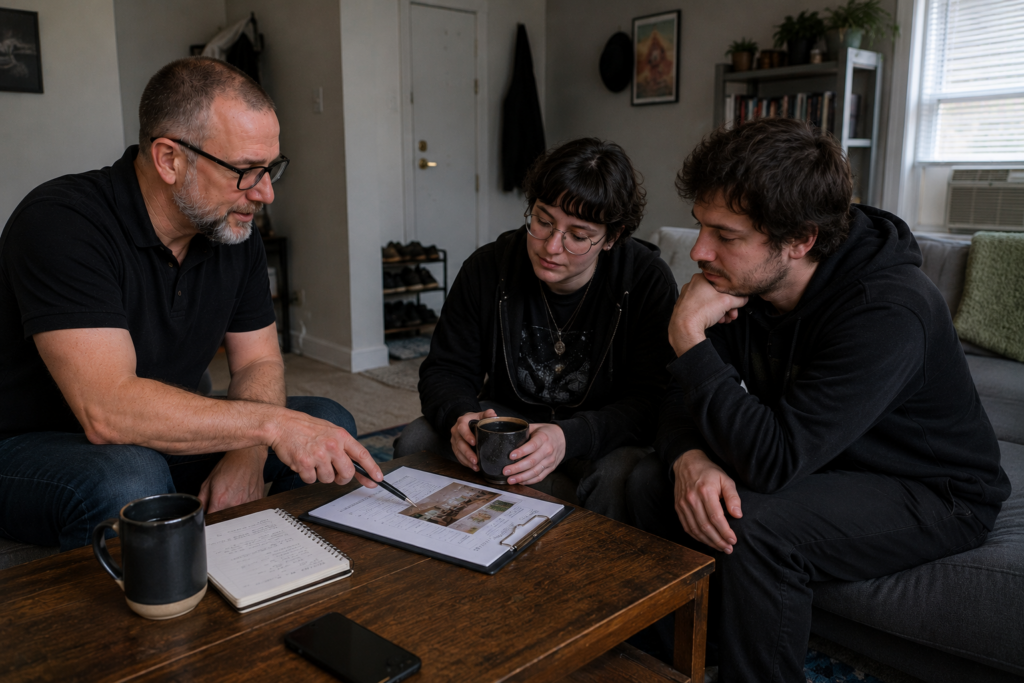
Every REALTOR® works differently.
Here’s what I try to offer my clients.
I explain what’s coming next.
Knowing what to expect reduces uncertainty.
Questions are always welcome.
I’d much rather answer one extra question than have you worry about it later.
I communicate the way that works best for you.
Whenever possible, we can use the communication methods that help you feel informed and comfortable.
I don’t believe in pressure.
If the right answer is “not this house,” then that’s the right answer.
I’ll help you focus on what matters.
Not every issue deserves the same amount of attention. I’ll help you separate cosmetic concerns from meaningful ones.
I’ll keep things organized.
Real estate has a lot of moving parts. My job is to help make those moving parts feel manageable.
I’ll be honest.
If I have concerns about a property, I’ll tell you. If I think it’s overpriced, I’ll tell you. Good advice isn’t always the advice that leads to the quickest sale.
My goal is confidence—not speed.
I’d rather see someone make the right decision than the fast one.
A Final Thought
Buying a home is one of life’s biggest milestones.
It’s okay if it feels exciting.
It’s okay if it feels stressful.
And it’s okay if you need a process that gives you time to think, asks rather than assumes, and communicates in a way that works for you.
I believe good real estate is about more than contracts and negotiations.
It’s about helping people make informed decisions with confidence.
If you’re buying a home in the Fredericton area or anywhere in Central New Brunswick, I hope this article has helped make the process feel a little less overwhelming.
And whether we ever work together or not, I hope you find a REALTOR® who takes the time to understand how you make decisions—because there isn’t just one right way to buy a home.
Tim Clancy — REALTOR®
REMAX East Coast Elite Realty
506-567-8541
tim@timclancy.ca
timclancy.ca


