

Fredericton, New Brunswick · Neighbourhood Guide · Tim Clancy, REALTOR® · March 2026
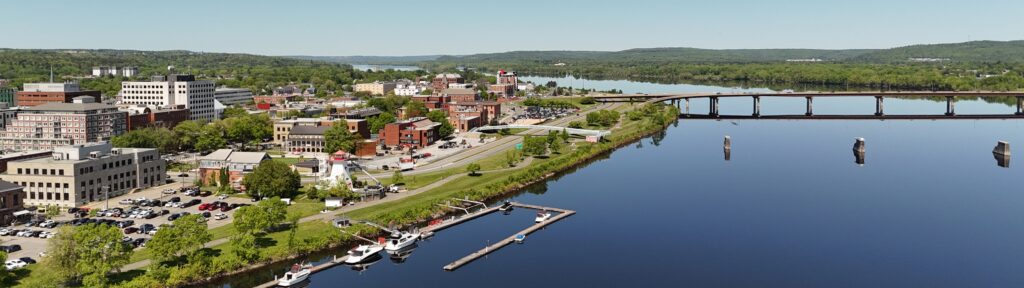
There’s a particular kind of morning that Waterloo Row does better than almost anywhere else in Atlantic Canada. The river is flat and silver. The trail is mostly yours. You’re twenty minutes from your desk, but right now that feels incidental — because the city is doing what it does best here, which is to be quietly, unhurriedly beautiful.
If you’re considering a move to Fredericton, or you’re already here and wondering whether this street is what it seems, the short answer is yes. The longer answer is what this post is about.
What Fredericton Actually Feels Like

Before we talk about the street, it helps to understand the city — because Fredericton is not a given. It’s a deliberate choice, and the people who choose it tend to stay.
With a metro population of roughly 122,500, Fredericton occupies a sweet spot that larger cities have mostly surrendered: you can still recognize faces, still find parking without anxiety, still get a table on a Friday without a reservation made three weeks in advance. Traffic — the kind that hollows out your evenings in Toronto or Halifax — is simply not a significant factor here. Most commutes are measured in minutes, not hours.
The city sits along the Wolastoq (Saint John River), which shapes daily life in ways both practical and atmospheric. The river isn’t just scenery — it’s infrastructure. It connects north and south banks, anchors the trail network, defines the seasons, and gives the city its particular quality of light. In summer, evenings on the riverfront have an almost European rhythm: people walking, cycling, pausing, talking. Nobody seems to be in a rush.
Fredericton is also a university city, home to both the University of New Brunswick and St. Thomas University. That academic presence gives it an intellectual energy that punches well above its size — in the arts scene, the food culture, the conversations you find yourself in at a farmers market stall or a gallery opening. The median age in the Southside neighbourhood around Waterloo Row is 36.9, and a remarkable 45.5% of residents hold a bachelor’s degree or higher. This is a neighbourhood of curious, capable people who read, travel, and care about where they live.
The close-knit quality of life here is not a talking point — it’s structural. When your city is this size, the social fabric stays intact in ways that larger cities quietly mourn. You know your neighbours. You run into your doctor at the market. The person who fixed your furnace last winter waves at you from a trail. That texture of daily familiarity is worth more than most people realize until they’ve lost it.
The Street Itself: Two Centuries of Staying Power
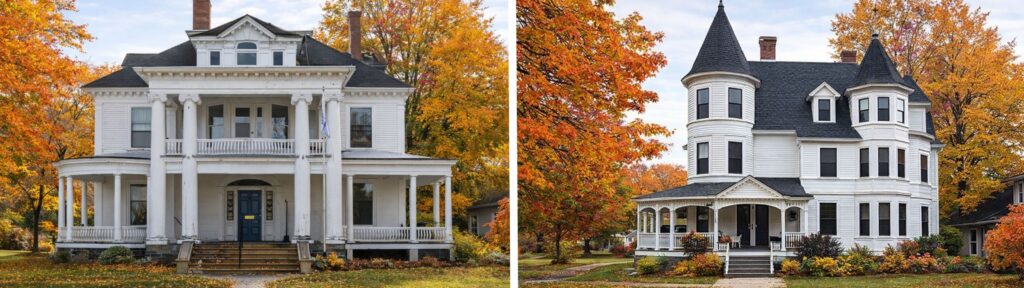
Waterloo Row is one of the oldest continuously residential streets in the country. That’s not marketing language — it’s the geological record of a neighbourhood that has been worth living on, without interruption, since the Loyalists arrived in 1783. The City of Fredericton marks the eastern end of the Row with the Loyalist Memorial, commemorating where those earliest settlers are said to have landed. The nearby Loyalist Provincials’ Burial Ground anchors that history in stone.
The architecture does the storytelling from there. The City’s heritage records document 36–38 Waterloo Row (the Royal Oak Inn) as dating to 1787, making it among the oldest surviving structures in Fredericton. At 102 Waterloo Row, the City notes an early 19th-century construction date — rare for any residential structure still standing in its original location. The Queen Anne Revival home at 132 Waterloo Row, with its turrets and asymmetric facade overlooking the river, photographs the way you’d want your home to photograph. The stone residence at 126 Waterloo Row, built in 1902, speaks to the street’s turn-of-the-century prestige and material seriousness.
What this means practically: when you buy on Waterloo Row, you are not buying a heritage vibe. You are buying a documented, verifiable heritage. The charm here is on file.
A Quick Heritage Timeline
- 1783 — Loyalist settlers arrive; the eastern end of Waterloo Row commemorated as the landing site
- 1787 — 36–38 Waterloo Row constructed, among the oldest surviving buildings in Fredericton
- Early 1800s — 102 Waterloo Row built, establishing the street’s residential character in the young city
- 1902 — 126 Waterloo Row, a prominent stone residence, completed
- Present — St. Anne’s Point Heritage Preservation Area protects the corridor under a municipal by-law
The Preservation Area — What It Means for Buyers
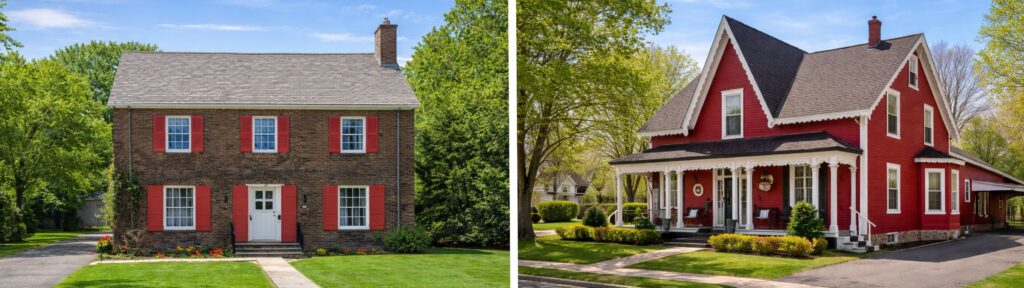
Waterloo Row sits within the St. Anne’s Point Heritage Preservation Area, administered under a municipal by-law. This is worth understanding clearly before you fall in love with a particular property.
The by-law regulates exterior changes, new building design, and the demolition or relocation of buildings within the designated area. If you want to change the exterior of your home — a new addition, updated windows, a paint colour change in some cases — you’ll apply for a Certificate of Appropriateness through the City. The process is designed to preserve neighbourhood character over time.
The flip side of that constraint is the thing that makes the street worth buying on: the preservation area protects the very scarcity that gives these properties their value. You cannot simply replicate Waterloo Row somewhere else. The combination of river orientation, heritage housing stock, and preservation standards creates a genuinely limited inventory of true substitutes — and that limitation is structural, not circumstantial.
For buyers who want to make significant exterior changes, it’s worth a conversation with the City’s planning department before you make an offer — not to be deterred, but to be informed. Most well-considered renovations are approvable. Surprises tend to come from not asking early enough.
The Farmers Market — A Way of Orienting Your Week

You could live on Waterloo Row and never think much about the Fredericton Boyce Farmers Market. Some people do. But most residents, given long enough, come to find that Saturday morning at the market is the rhythm around which the rest of the week quietly organizes itself.
The market has been running since 1951. It operates every Saturday from 7 a.m. to 1 p.m. and hosts more than 200 vendors — produce, baked goods, prepared food, crafts, flowers, music, and the particular pleasure of a conversation you didn’t plan to have. It’s the city gathering in the way cities rarely gather anymore: in person, unhurriedly, over things that are made locally and purchased by people who live nearby.
From Waterloo Row, the market is close enough to walk. That proximity matters in a way that’s hard to quantify and easy to feel. When a place you love is ten minutes away on foot, you go more often. You bring home something you didn’t plan to buy. You run into someone you haven’t seen in a while. The market becomes less of an errand and more of a habit — and habits shape a life.
“The Boyce Farmers Market is the city gathering the way cities rarely gather anymore — in person, unhurriedly, over things made locally and purchased by people who live nearby.”
For buyers relocating from larger cities, this is often the thing that surprises them most. Not the architecture, not the river view — but the fact that there is still a place like this, and that it’s still full every week.
Trails, Parks, and the Case for a Car-Light Life

Fredericton has more than 150 kilometres of non-motorized multi-use trails, maintained year-round. Paved sections are plowed in winter; park trails are groomed for skiing and snowshoeing. The trail system is not a weekend amenity. It is daily infrastructure that changes how people structure their time.
From Waterloo Row, the river trail connects east and west along the south bank, and the Bill Thorpe Walking Bridge connects north and south across the Wolastoq. The bridge carries an estimated 3,000 crossings per day in summer and around 1,000 in winter — one of the most-used pieces of active transportation infrastructure in the city. This is not a scenic bridge that people visit on special occasions. It’s a commuting bridge that people use on Tuesdays.
If the trail takes you west, you eventually find yourself at Odell Park — 400 acres of urban forest featuring a duck pond, arboretum, and botanic garden. Odell Park is the kind of place that, once you know it, becomes almost impossible to imagine living without. It’s where you go when you need to think, when the weather surprises you on a weekday afternoon, when a visitor comes to town and you want to show them something that isn’t on a brochure.
The combination of riverfront trail, bridge connectivity, and Odell Park means that a meaningful portion of daily life — commuting, exercising, clearing your head — can happen on foot or by bike. For buyers who have spent years navigating traffic and the ambient stress of car-dependent living, this is genuinely transformative.
Arts, Culture, and the Things That Make a City Legible

Fredericton doesn’t have the scale to overwhelm you with cultural options. What it has instead is a curated, coherent arts identity — and for many people, that’s better.
The Beaverbrook Art Gallery sits on the riverfront downtown, a short walk or bike ride from Waterloo Row. It holds the province’s most significant art collection, including works by Cornelius Krieghoff, Salvador Dalí, and an impressive collection of historic Canadian paintings. It is the kind of institution that people visit from across the country. Residents of Waterloo Row can visit on a Wednesday after work.
The Fredericton Playhouse anchors the performing arts scene, hosting theatre, music, dance, and comedy through a year-round season. Harvest Jazz & Blues, held each September, brings the city to a kind of joyful collective attention — outdoor stages, late sets, the particular energy of a mid-sized city that knows how to celebrate.
Then there are the quieter things: independent bookshops, gallery openings, studio tours, community theatre, the neighbourhood café that hosts a poetry reading on a Thursday and still makes a genuinely good espresso. For buyers who have spent years in cities where culture is abundant but rarely personal, Fredericton often offers something more valuable: a cultural life that fits you. Where you know the artist, or the brewer, or the chef — and they know you.
The Honest Conversation About Flooding

Living on a riverfront street means living with a riverfront reality: the Wolastoq floods. This isn’t a secret, and it isn’t a reason to walk away — but it is a reason to buy with eyes open.
Spring flooding events affect portions of the Fredericton riverfront periodically, including areas in the Waterloo Row corridor. The City maintains a Neighbourhood Flood-Risk portal with household-level guidance on preparation: sump pumps with battery backup, raised mechanical equipment, anchored fuel storage, and regular monitoring of river levels during the spring melt period.
Properties that have been thoughtfully prepared — and that can show their work — are a different purchase from those that haven’t. When evaluating any Waterloo Row property, ask specifically about flood history, current flood-proofing measures, and what basement and mechanical system arrangements exist. A home that has been properly prepared for spring flood conditions is not a risk. It’s a prepared, honest property on a remarkable street.
The City also undertakes municipal-scale flood mitigation work, including backflow valves, flood berms, and updated culvert infrastructure. Development requirements in flood-prone areas include elevating living space to minimum set elevations — standards that exist to protect long-term value.
The most important thing a buyer can do on Waterloo Row is ask directly, inspect thoroughly, and make sure any flood-related history is disclosed and documented before closing.
The Market in Numbers
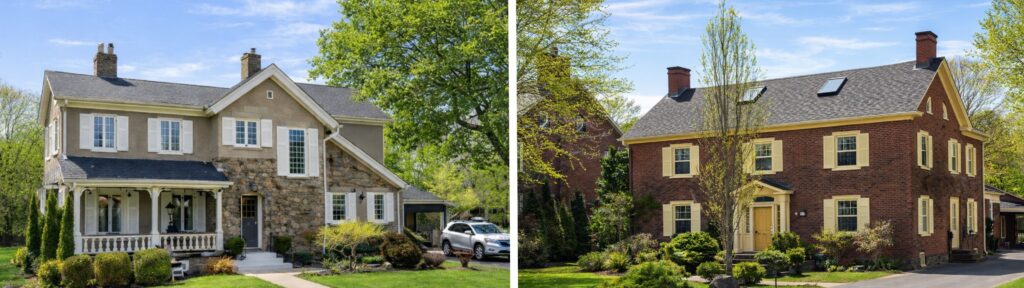
The February 2026 MLS® HPI benchmark data for Fredericton and Region provides a useful pricing baseline. Heritage properties on Waterloo Row will typically price above these regional figures — the scarcity premium is real — but this gives you the foundation:
- Composite benchmark: $363,400 — up 5.0% year-over-year, up 68.8% over five years
- Single family benchmark: $366,800 — up 6.4% year-over-year, up 68.4% over five years
- One storey benchmark: $375,400 — up 8.4% year-over-year
- Two storey benchmark: $352,700 — up 3.0% year-over-year
- February market activity: 118 sales, 207 new listings, 459 active listings, 3.9 months of inventory
Source: MLS® HPI Benchmark, CREA / New Brunswick REALTORS®, February 2026. Regional figures only — street-level pricing on Waterloo Row requires current comparable analysis.
The five-year appreciation numbers tell you something important about long-term value here. The current 3.9 months of inventory suggests a market that is negotiable but not soft — buyers have some room, sellers still hold meaningful leverage on well-presented properties.
The Southside Neighbourhood at a Glance
- Median age: 36.9 years
- Bachelor’s degree or higher: 45.5% of residents
- Immigrants: 16.2% — a growing, diverse community
- Owner/renter split: approximately 50/50
- Single-detached homes: 36.2% of housing stock
- Median household income: $68,238
Source: Statistics Canada, 2021 Census — Southside Tracts 1–8
Who Buys on Waterloo Row

Not everyone — which is part of what makes it worth buying on.
The typical Waterloo Row buyer tends to be someone who has reached a point in life where the quality of the immediate environment matters more than the size of the lot. They’ve owned property before. They’ve done the suburban commute and know how it compounds. They want to walk to something — the market, a gallery, a good dinner — without it being a production. They appreciate that their home has a history that precedes them, and they’re willing to steward that history rather than override it.
They’re also willing to be honest about trade-offs. The preservation area means you don’t fully own the exterior of your home in the conventional sense. The river means spring can be anxious. Older housing stock means spending money maintaining things that in a newer home would just work.
What you get in return is a life that has texture. A street you’re proud to give your address on. A Saturday morning routine that restores rather than depletes. The quiet confidence of a neighbourhood that has been worth living on for 240 years and shows every sign of continuing to be.
“When you find the right match on Waterloo Row, it tends to feel less like acquiring a property and more like stepping into a long-running story that still has room for your chapter.”
A Note on What It’s Like to Live in Fredericton

People who move here from larger cities often go through a brief adjustment period — not because Fredericton is lacking, but because it requires recalibrating what “enough” looks like. In a city that’s meaningfully more affordable than Vancouver or Toronto, where the commute is eight minutes and the morning trail is quiet by the standards of anywhere else, you start to wonder what you were actually paying for before.
Fredericton’s population is growing — significantly, with recent years bringing professional and academic newcomers from across Canada and internationally. The city has a bilingual texture that gives the province a distinctive character, feeling more cosmopolitan than its size would suggest.
The seasons are real here. Winter is a proper winter, which the trails accommodate with plowing and grooming. Summer on the riverfront is genuinely glorious. Fall in New Brunswick is among the most spectacular in Canada — the kind of October that makes you feel slightly embarrassed that you haven’t always lived somewhere like this.
Fredericton is not trying to be something it isn’t. It’s a capital city with a university, a serious arts community, an outdoor culture, and a quality of life that larger cities routinely sacrifice in the name of scale. For the right person — and if you’ve read this far, you may well be that person — it’s not a compromise. It’s the point.
If you’re looking for a home on Waterloo Row or Downtown Fredericton, I’d love to assist you with your search. Click the image to the right and there you can sign up to receive a free list of available properties, and be kept up to date as new listings hit the market. Never miss out again!
Sellers, Click here!

Tim Clancy — REALTOR®
REMAX East Coast Elite Realty
506-567-8541
tim@timclancy.ca
timclancy.ca

Tim Clancy, REALTOR® · RE/MAX East Coast Elite Realty · Serving Fredericton, the greater Capital Region, Washademoak and Grand Lakes, and surrounding areas · timclancy.ca
Data sources: MLS® HPI Benchmark, CREA / NBREA, February 2026; Statistics Canada 2021 Census; City of Fredericton heritage resources; Fredericton Boyce Farmers Market; City of Fredericton Parks and Trails. All information subject to change; buyers and sellers should verify all material facts independently.


