

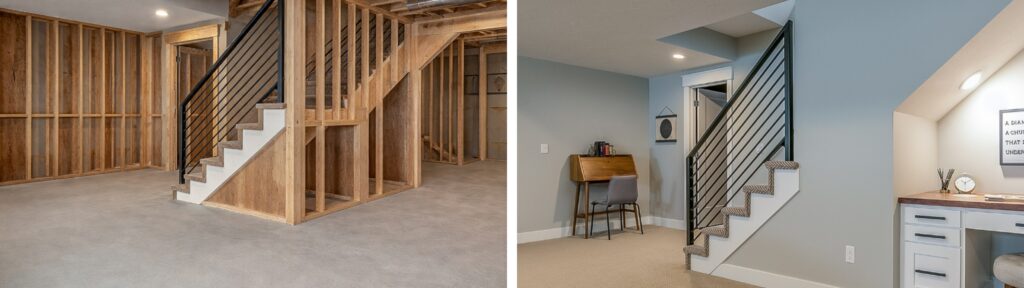
For some people, the challenge is qualifying for a home.
For others, it’s figuring out how to make better use of the one they already own.
In both cases, a basement apartment can be part of the solution.
Whether you’re:
- Buying a home and looking to improve affordability
- Or already own a property and are considering adding a secondary unit
There are ways to use rental income and smart financing to make the numbers work.
How a Basement Apartment Improves Affordability
At a high level, a basement apartment does two things:
- It brings in income
- It reduces the effective cost of owning your home
For buyers, that can mean qualifying for a higher purchase price.
For homeowners, it can mean easing monthly costs or unlocking new opportunities.
Using Rental Income to Qualify for a Mortgage
If you’re buying a home with a basement apartment, lenders may allow you to use rental income to help qualify.
Here’s how that typically works:
- Existing, legal apartment:
Up to 100% of the rental income may be used (depending on the lender) - New apartment (Purchase Plus Improvements):
Typically 50% of the projected rental income can be used
That difference matters.
If you’re buying a home with an existing unit, your borrowing power can increase significantly.
If you’re creating one, the lender takes a more conservative approach.
A Simple Example
Let’s say a basement apartment could reasonably rent for:
$1,200 per month
- Existing apartment → up to $1,200/month may be used
- New apartment → about $600/month may be used
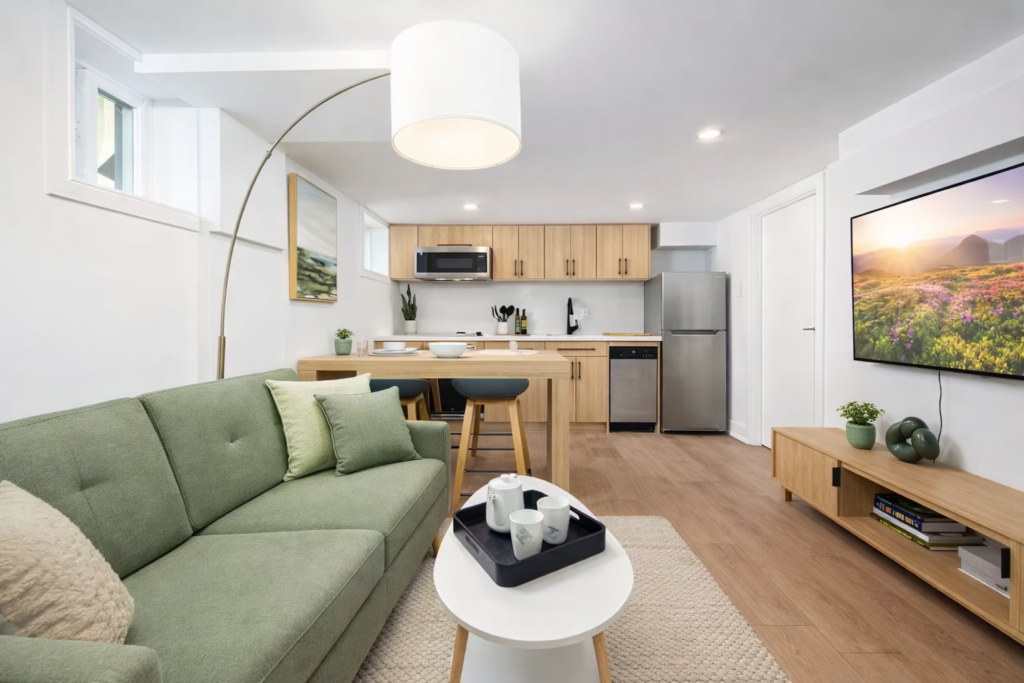
Even at 50%, that can make a meaningful difference in what you’re able to a
What If the Home Doesn’t Have an Apartment Yet?
This is where a lot of opportunity exists.
You can use a program often called Purchase Plus Improvements to:
- Buy a home
- Build a basement apartment
- Finance the improvements through your mortgage
In many cases, buyers are able to:
- Create the unit
- Increase the home’s value
- Generate income shortly after moving in
If you want a deeper breakdown of how that works, you can read more here:
👉 Click here to read my blog on Purchase Plus Improvements.
Other Financing Options for Adding a Basement Apartment
There are a few different ways to finance a basement apartment, and the right approach will depend on your situation.
Using Equity From an Existing Property
If you already own a home, you may have built up equity that can be used to fund a basement apartment.
Options can include:
- Refinancing your current home
- Setting up a Home Equity Line of Credit (HELOC)
- Using a readvanceable mortgage
This can give you flexibility to:
- Cover contractor deposits
- Handle cost overruns
- Move forward without relying entirely on lender holdbacks
Readvanceable Mortgages (e.g., Manulife One)
Some homeowners choose to restructure their mortgage into a more flexible product.
These types of mortgages can allow you to:
- Access equity as you pay down your mortgage
- Re-borrow funds for renovations
- Manage cash flow more actively
For the right situation, this can be a useful tool when planning improvements or future purchases.
Paying for Improvements Outside the Mortgage
Some buyers and homeowners choose to:
- Finance the purchase normally
- Pay for the basement apartment separately
This might involve:
- Savings
- Lines of credit
- Other financing options
This approach can simplify the purchase, but requires access to capital.
Not All Lenders Are the Same
One important point that often gets overlooked:
Not all lenders approach rental income or improvements the same way.
Some are:
- More flexible with projected rent
- More open to in-law or non-traditional suites
- More experienced with Purchase Plus Improvements
If one lender says no, it doesn’t always mean the opportunity isn’t viable.
It may just mean you need a different approach.
A strong mortgage broker can make a significant difference here.
What Can You Actually Build?
A basement apartment doesn’t always have to be a fully separate, legal unit to add value.
Depending on the property and lender, options may include:
- Self-contained basement apartments
- In-law or granny suites
- Secondary living spaces with partial separation
The key is that the improvement:
- Adds value to the home
- Is completed properly
- Makes sense for the property and the area
Zoning and local regulations still matter, especially in rural New Brunswick, so it’s important to understand what’s permitted.
Building Code Considerations (Often Overlooked)
If your goal is to create a legal basement apartment, there are requirements that go beyond layout.
Some of the more common ones include:
- Proper egress windows for bedrooms
- Minimum ceiling heights
- Fire separation between units
- Soundproofing
- Separate entrances (in many cases)
- Electrical and ventilation requirements
Egress windows come up often.
If you’re not familiar with them, I’ve written more about that here:
👉 [Link to your egress window blog]
Even if you’re not creating a fully legal unit, these factors can still impact safety, resale, and how the property is viewed by lenders and appraisers.
What Lenders Don’t Like
Some properties and situations can make this difficult or impossible to finance.
Common deal breakers include:
- Active water intrusion
- Mold issues
- Major structural concerns
- Homes requiring significant remediation before improvements
That said, it’s not always a hard no.
A knowledgeable mortgage broker may still be able to help you explore other options.
A Longer-Term Strategy
Some buyers and homeowners take this a step further.
They:
- Buy or improve a home with a basement apartment
- Live in the property while renting part of it
- Build equity faster through both appreciation and rental income
- Use that equity to move into their next home
- Keep the original property as a rental
Over time, this can become a stepping stone toward something larger.
Final Thoughts
A basement apartment isn’t the right fit for everyone.
But for the right situation, it can:
- Improve affordability
- Increase flexibility
- Open up more options
The key is understanding how it works before making decisions.
Thinking About Going This Route?
If you’re considering adding a basement apartment, I can help you:
- Identify properties with real potential
- Spot risks that aren’t always obvious
- Think through whether the numbers make sense
No pressure, just a conversation to see if it’s the right fit.
Tim Clancy — REALTOR®
REMAX East Coast Elite Realty
506-567-8541
tim@timclancy.ca
timclancy.ca

If you’re looking for a property with basement apartment potential, you can click the image to the right to receive a free list of available properties and stay updated as new listings hit the market.
Never miss out again!

Frequently Asked Questions
What happens if I don’t use all of the renovation funds?
Unused funds are typically held in trust by your lawyer for a period of time. If they aren’t used, they are usually returned to the lender and applied to your mortgage as a lump sum payment.
What if the renovations cost more than expected?
It’s best to build some buffer into your quotes. If unexpected issues arise, you may need to cover additional costs. In some cases, your lender or broker may help explore options.
Do I need to pay for renovations upfront?
Not in full. However, you should expect to cover contractor deposits or material costs upfront. Funds are released after the work is completed.
Does a basement apartment need to be legal?
Not always, but if you want to use rental income for mortgage qualification, lenders are typically stricter and may require a legal, conforming unit.
Do all lenders allow rental income?
No. Policies vary between lenders. Some are more flexible than others, which is why working with the right mortgage broker matters.
Important Disclaimer
Building requirements, zoning, and lender guidelines can vary depending on the property and location.
Before moving forward, it’s important to:
- Confirm local zoning and permitted uses
- Speak with your lender or mortgage broker
- Consult qualified professionals where needed
This article is general information, not legal, financial, or construction advice.


