

When the “Right House” Doesn’t Exist
If you’ve been looking at homes in New Brunswick lately, you’ve probably felt it.
You find something close… but not quite right.
The layout doesn’t work. The kitchen needs updating. There’s no income potential. Or the homes that do check all the boxes are priced higher than you’re comfortable with.
This is where a lot of buyers get stuck.
But there’s another way to approach it.
Instead of trying to find the perfect home, you can buy a property with the right foundation and turn it into what you need from day one.
That’s where a Purchase Plus Improvements program comes in.
What Is Purchase Plus Improvements?
This program, sometimes called Mortgage Plus Improvements, allows you to:
- Buy a home
- Finance renovations
- Roll everything into one mortgage
The approval is based on what the home will be worth after the improvements are complete, not just what it is today.
Here’s how the money side typically works:
- Renovation funds are approved upfront
- Those funds are held in trust by your lawyer
- Funds are released once the work is completed and verified
Most buyers don’t need to front the full cost of renovations.
But you may need to plan for:
- Contractor deposits
- Material costs upfront
A good mortgage broker can help structure this so it’s manageable.

How This Helps You Find What Doesn’t Exist
A lot of buyers are searching for something very specific:
- A home with an income suite
- A modernized interior
- A layout that fits their lifestyle
- A detached garage or shop
The challenge is, those homes are often hard to find or priced at a premium.
Purchase Plus Improvements gives you another option.
Buy a home with potential, and build what’s missing into it.
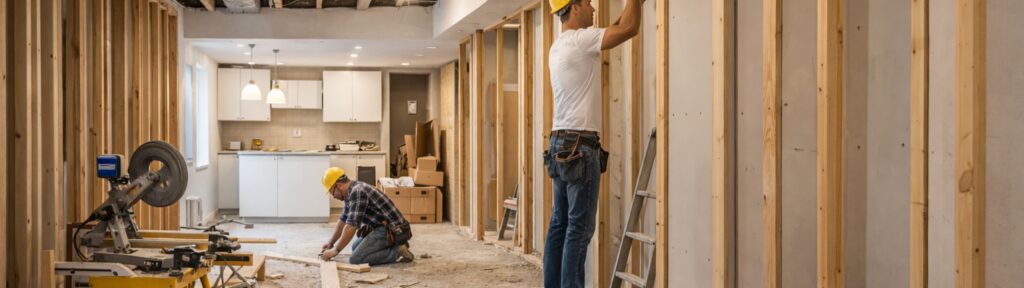
That might mean finishing a basement, updating key areas, or creating a secondary suite.
A Quick Note on Basement Apartments
Adding a basement apartment is one of the most powerful ways to use this program.
At a high level, it can:
- Help offset your mortgage
- Improve affordability
- Create long-term flexibility
From a qualification standpoint:
- If you’re adding a new suite, lenders will often allow you to use up to 50% of the projected rental income as income in the qualification process
- If the home already has a legal, existing suite, you may be able to use up to 100% of that income
I’ll break this down in detail in a separate post, because there are important nuances, especially here in New Brunswick.
👉Click here to read my blog on basement apartments in New Brunswick.
A Real Strategy: Stepping Into Your Next Home
Some buyers use this approach as a longer-term plan.
It can look like this:
- Buy a home using Purchase Plus Improvements
- Add a basement apartment or in-law suite
- Live in the home and rent part of it
Over time, you build equity and improve your cash flow.
Then down the road:
- You move into your next home
- And keep the original property as a rental, with both units generating income
- Or, by renting a portion of your home and building equity faster, you may be able to use that equity to help step into your dream home
This isn’t a shortcut. But for the right buyer, it can be a very effective path forward.
What Types of Improvements Are Typically Approved?
Lenders are generally looking for improvements that are:
- Permanent
- Add value
- Improve the overall condition of the home
Common examples include:
- Basement apartments or in-law suites
- Kitchens and bathrooms
- Flooring, walls, and finishing basements
- Electrical, plumbing, and HVAC upgrades
- Roofing, windows, and insulation
A suite does not always need to be fully legal to be considered, but it does need to contribute to the value of the property, and the lender will assess risk carefully.
What Doesn’t Get Approved (and What Raises Red Flags)
Some things lenders tend to be cautious about:
- Cosmetic-only upgrades
- Overly high-end finishes for the neighbourhood
- Large landscaping budgets
- DIY work without proper scope and quotes
And then there are the true deal breakers:
- Mold remediation
- Water intrusion issues
- Major structural problems
- Knob and tube wiring upgrades
These are not viewed as improvements. They are viewed as risk. Any issue that would affect the insurability of a home, likely won’t get approved for purchase plus improvements. But don’t give up just yet. A strong mortgage broker may have options that could still make these types of properties work for you.

A Note on Detached Garages and Similar Projects
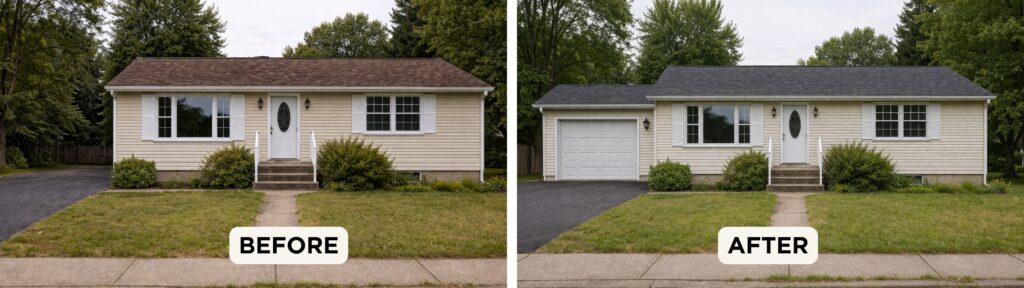
I’ve seen buyers successfully use this program to build detached garages, rework layouts, and make meaningful upgrades.
In many cases, these types of improvements are absolutely workable.
With something like a detached garage, approval can depend on how the lender and appraiser view the added value. Some lenders are very comfortable with it. Others may be more conservative.
That’s where having a strong mortgage broker matters.
If one lender isn’t the right fit, another may be.
What the Process Actually Looks Like
Here’s how it typically unfolds:
- Find a property with the right potential
- Submit an offer, conditional on financing
- Allow time to gather quotes
- Obtain contractor quotes
- Submit your plan to the lender
- Appraisal based on improved value
- Close on the property
- Complete the renovations
- Funds are released once the work is verified
You may not need to front the full renovation cost, but you should plan for deposits or materials.
Working with the right REALTOR® and mortgage broker is key here.
New Brunswick-Specific Considerations
In New Brunswick, especially in rural areas, there are additional factors to consider:
- Zoning regulations
- Septic system capacity
- Well capacity
- Permits and inspections
- Insurance implications
- Rental demand depending on location
These can directly impact whether your plan is feasible.
When This Strategy Makes Sense (and When It Doesn’t)
This approach works well for buyers who:
- Are open to a renovation process
- Want to create value over time
- Are priced out of turnkey homes
- See the benefit of income potential
It may not be the best fit if:
- You need something fully move-in ready
- Your budget is already tight
- You’re not comfortable managing a renovation
A Simple Example
Let’s say:
- Purchase price: $350,000
- You add a basement apartment
- Rental income: $1,200/month
If a lender allows you to use 50% of that income:
- $600/month can be applied toward your qualification
That can make a meaningful difference in what you’re able to afford, while also improving your monthly cash flow.
One Important Caution
It’s easy to get excited about the possibilities.
But not every dollar spent on improvements translates directly into value.
Over-improving for the area, or focusing on features that don’t align with the local market, can limit your return.
The goal is not just to improve the home.
It’s to improve it in a way that makes sense for the property and the area.
Final Thoughts: Strategy Over Perfection
The best home isn’t always the one that checks every box on day one.
Sometimes, it’s the one that gives you the ability to shape it into what you need.
Purchase Plus Improvements isn’t right for everyone.
But for buyers who are willing to think strategically, it can open doors that otherwise wouldn’t exist.
Thinking About Going This Route?
If you’re considering this approach, I can help you:
- Identify properties with real potential
- Spot risks that aren’t always obvious
- Think through whether a renovation plan makes sense
No pressure, just a conversation to see if it’s the right fit.
If you’re looking for a property to add an apartment to, or are just struggling to find the right property, you can click the image and sign up to receive a free list of available properties, and be kept up to date as new listings hit the market.
Never miss out again!

Tim Clancy — REALTOR®
REMAX East Coast Elite Realty
506-567-8541
tim@timclancy.ca
timclancy.ca

Frequently Asked Questions About Purchase Plus Improvements
What happens if I don’t end up using all of the renovation funds?
If you don’t use all of the approved funds, the remaining money is typically held in trust by your lawyer for a period of time, often one to two years.
At some point, the lawyer will need to close out the file and the lender will want those funds accounted for. In most cases, any unused funds are returned to the lender and applied directly to your mortgage as a lump sum payment, rather than requiring a refinance.
What if the renovations end up costing more than the quotes?
This is something to plan for upfront.
It’s generally a good idea to build some cushion into your quotes where possible. If unexpected issues come up, like hidden damage behind walls or additional work required to meet code, those costs may not be covered under the original approval.
In those cases, you may need to cover the difference yourself. Depending on the situation, your lender or mortgage broker may be able to help you explore options, but it’s best to plan conservatively from the start.
Do I need to pay for the renovations upfront?
Not usually in full.
Most buyers don’t need to front the entire renovation cost. However, you should expect to cover things like contractor deposits or material costs upfront. The approved renovation funds are released after the work is completed and verified.
A good mortgage broker can help you plan for this so there are no surprises.
How long do I have to complete the renovations?
Timelines can vary depending on the lender, but most expect the work to be completed within a reasonable timeframe, often within 90 to 180 days.
In some cases, especially if funds remain unused, the trust account may stay open longer. It’s important to have a clear plan and timeline before starting.
Can I do the work myself?
Some lenders may allow limited self-performed work, but in most cases, they prefer to see quotes from qualified contractors.
This helps ensure the work is completed to a standard that supports the appraised value of the home.
What if the appraisal doesn’t support the improved value?
If the appraised value after improvements comes in lower than expected, it can affect how much funding is approved.
This is why it’s important to:
- Keep improvements in line with the neighbourhood
- Work with realistic budgets
- Get solid quotes and plans upfront
Having the right team involved early can help reduce this risk.
Do all lenders offer Purchase Plus Improvements?
No, and this is an important point.
Not all lenders approach these programs the same way. Some are more flexible than others, especially when it comes to certain types of improvements.
If one lender says no, it doesn’t necessarily mean the deal won’t work. It may just mean you need to explore other options with your mortgage broker.
Does a basement apartment need to be legal?
Not always, but it depends on the lender and how the property is being evaluated.
For income to be used in mortgage qualification, lenders are typically stricter and may require the suite to be legal and conforming.
Even when income isn’t being used, the improvement still needs to add value and be viewed as reasonable by the appraiser.


